Article
Housing and Infrastructure Ambitions Face Funding Challenge
April 22, 2026
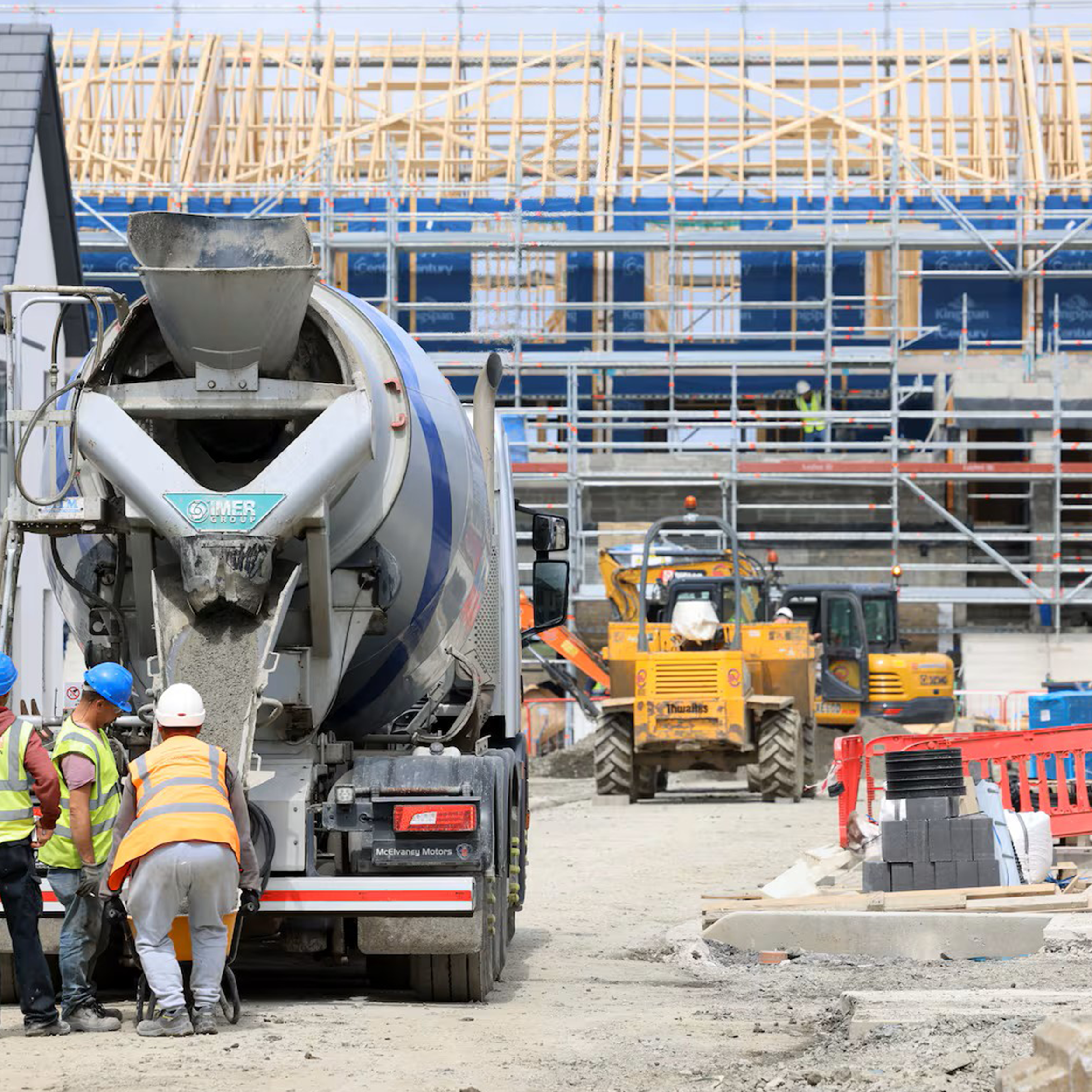
Ireland’s housing challenge is often framed as a question of planning, policy or delivery. While each one of these factors matter, they don’t fully capture the scale of what is now being attempted. Delivering housing at the volumes targeted, while simultaneously expanding transport, utilities and social infrastructure, is fundamentally a huge financing challenge.
Meeting current and projected housing targets will require sustained capital deployment well beyond what annual public expenditure can support on its own, even in a period of strong fiscal health.
As housing output increases, the call on equity, balance‑sheet capacity and enabling infrastructure rises with it. With the State already committed to unprecedented levels of long‑term investment under the National Development Plan (NDP), the central question is not ambition, but how housing and infrastructure delivery can be financed reliably and at the required scale over the next decade.
From targets to capital reality
Delivering 50,500 homes annually is the minimum required to address years of undersupply across all tenures, but a clear gap in financing exists to deliver this scale. That reality was explicitly recognised in the Funds Sector 2030 Report, published in October 2024, which estimated that more than €100 billion will be required to fund housing delivery to the end of the decade.
Crucially, the report acknowledged the clear majority of this funding will need to come from the private sector. This was not an ideological position, but a practical one: housing delivery at scale is inherently capital‑intensive and cannot be financed solely from the State balance sheet without crowding out other critical public investment.
Alongside this ambition sits a parallel infrastructure programme of comparable scale. The NDP provides approximately €165 billion of public capital to 2030, including around €35 billion for transport, over €20 billion for healthcare facilities, and more than €12 billion for water and wastewater assets. But even with unprecedented public allocations, the combined housing and infrastructure capital requirement materially exceeds what the State balance sheet can sustain without constraining delivery or displacing other priorities.
Delivery at scale: capacity and capital constraints
Delivery data illustrates the challenge. While housing completions improved last year to more than 36,000, the country’s two largest developers themselves have noted that meeting national targets on a sustained basis may require up to six builders of comparable size and balance‑sheet strength. Creating, capitalising and sustaining companies of that scale requires reliable access to equity over multiple cycles.
The same structural constraint is evident across infrastructure. MetroLink – the largest transport project in the history of the State – has been recently estimated as costing possibly as much as up to €23 billion. The €1.3 billion Greater Dublin Drainage Project is critical to unlocking housing capacity across the Greater Dublin Area. These programmes, and others, are essential, but they are capital‑intensive and exposed to delivery and inflation risk – precisely the characteristics that limit exclusive reliance on exchequer funding.
Equity requirement: quantifying the shortfall
The central issue across both housing and infrastructure is equity. Debt markets remain broadly accessible, but equity has become the limiting factor in sustaining delivery.
The NDP provides for €28 billion of direct State housing funding, while to hit the required targets will need an estimated €100 billion plus. The scale of the gap is therefore material. While debt can fund a substantial portion of delivery, a significant upfront equity component is required to unlock sites, support balance sheets and sustain output.
When set alongside the demands of transport, utilities and social infrastructure, all drawing on the same pool of long‑term capital, it becomes clear that this is not a marginal shortfall.
Access capital when you can, not when you have to
Recent exchequer returns outlined a €1.6 billion transfer to the Future Ireland Fund and the Infrastructure, Climate and Nature Fund, a clear acknowledgment that even in a period of fiscal strength, long‑term housing and infrastructure delivery requires capital to be set aside and structured beyond the annual exchequer cycle.
But the State’s role is not to displace markets; it is to create the conditions in which long‑term equity can commit with confidence, through clear policy signals, shared risk and deliberate co‑investment. So even with the current health of the State balance sheet, it is not a reason to postpone sourcing equity from elsewhere – it is a catalyst.
If my experience in international capital markets has taught me anything, it is to access capital when you can, not when you have to. Doing so preserves optionality, strengthens delivery capacity and allows the State to set the terms of engagement from a position of strength rather than necessity.
Domestic household wealth as a funding source
There is also a domestic dimension to the equity challenge that warrants greater attention. Irish households hold substantial savings, with bank deposits estimated to exceed €170 billion, yet participation in public markets remains low by international standards. As Larry Fink observed at the 10th anniversary event for the Ireland Strategic Investment Fund (ISIF), Ireland is not short of capital – it is short of mechanisms that connect domestic savings with long‑term investment in the Irish economy itself. As a result, ownership of the assets underpinning housing and infrastructure delivery is increasingly externalised.
While international capital is essential, there is a strong case for fostering a broader culture of long‑term public market participation among Irish households. This would help fund national objectives while allowing citizens to share more directly in the returns generated by domestic economic growth. The outcome of the Government’s savings and investment initiatives may yet play a role in addressing this imbalance.
Investable opportunity, not a capital shortage
Ultimately, the challenge facing housing and infrastructure delivery in Ireland is not incremental. It is structural. While the scale of capital required is significant, it should not be viewed as prohibitive. On the contrary, it represents an attractive and appropriate opportunity for long‑term institutional equity – particularly pension, insurance and long‑income capital seeking stable, inflation‑linked returns from essential assets.
CBRE has undertaken detailed analysis of these funding gaps, including the equity requirement relative to domestic and international debt, and is actively engaged with global capital providers across housing and infrastructure. Appetite among institutional investors for Irish assets remains strong, underpinned by deep demand fundamentals and regulated revenue characteristics. The task ahead is not just to persuade capital of the opportunity, but to ensure the structures, scale and delivery pathways exist to allow that capital to be put to work.